
Have You Done Your R.E.C.O.N.?
Before any mission, a Ranger does his recon. The road home is no different. Five things you can control — right now — to prepare for the hardest mission of your life.
If you've made it to this posting…you must be preparing to begin a recovery journey. Or maybe you're already on the road and you're looking for some new ideas. Either way, you've come to a place where I'm willing to offer some help…if you're ready to put some skin in the game. I want to be honest from the start. As long as you understand recovery is about doing, not knowing, then I have managed your expectations for what is to come. This post is designed to strip away a lot of outside noise and allow you to focus on you…and focus on the things you can control.
As a former Army Ranger, one of my greatest educational experiences came to me when I was a young, green second lieutenant. I was enrolled in the U.S. Army's legendary Ranger School in the late fall of 1982. During this grueling 58-day leadership course, I had the opportunity to learn the invaluable lesson of the effectiveness of a well-planned and well executed reconnaissance prior to a combat mission. For my civilian readers, here's a bit of background on reconnaissance, or recon, as we commonly refer to it even today. Warriors take a knee and I'll get the rest caught up quickly.
Part of the process of conducting military operations involves the development of assumptions about your enemy. In an effort to confirm or deny these assumptions (this allows assumptions to become facts) you send out a smaller force to observe and report the actual disposition of the enemy. Sometimes, available time does not allow for this in real combat. On today's battlefield, when human forces are unable to conduct these important operations, technology provides our forces with a new means to "sneak up and spy" on the enemy. This technology comes to us as satellite imagery or unmanned aerial vehicles.
The intent, as you can see is to solidify or modify your original plans, so that you take full advantage of your available forces and provide these forces with the best chance to protect themselves and to give them their greatest chance for mission accomplishment. Above all else, during a recon you must not make contact with the enemy! If contact is made, well you're no longer conducting a recon; you're in a firefight!
It was a great lesson because I could relate many training (and combat) successes to a well planned and executed recon during my time in service. We're all caught up now…Warriors, on your feet!
As a life coach working with warriors today, I believe that these same principles hold true in the struggle with all recovery journeys…only with a bit of a twist.
What's in a NAME?
To frame this story it's important to make this statement: The military loves acronyms! ASVAB, MRE, DOD, SECDEF, SOCOM…you get the picture. Acronyms are great for warriors because they represent complicated entities, but become easy to understand by shortening the title to some sort of pronounceable word or phrase. With this in mind, I'd like to put this out there for all of my warrior sisters and brothers that are beginning their mission of recovery. Before conducting an engagement with addiction, TBI, combat trauma, or just old behaviors that don't work for you any more, you need to spend some time conducting your own RECON.
In this case, RECON is an acronym I've developed to remind you of the preparation that needs to go into effect if you want the best chance of improving your healing treatment, no matter where you get the additional help. By doing these 5 things, these activities that YOU can control, you will be much more prepared than having ignored these important steps.
R is for Record Yourself

Due to the complicated nature of trauma related experiences, no two experiences are ever the same. You may share many symptoms and emotions with other stressed combat buddies, but your experiences will never be identical. For this reason, I would urge you to begin documenting your life moving forward. Now before you roll your eyes and scoff, realize that world-class athletes record their daily workouts, nutritional intake, moods, energy level, sleep quantity and quality, water intake, and recovery therapy and supplementation.
They do this for several reasons. First, they have set goals to attain and they know that they must do everything possible, within their control, to prepare to meet these goals. Recording their steps along the way help to reinforce their goals and provide a record to compare to their progress. Prior to starting any therapy, how much more effective do you think your work would be if you could look back over the course of 30, 60, or 90 days and began to draw some conclusions about how you are feeling and possibly what is triggering your emotional states? This doesn't have to be a formally written text. It could be a simple checklist of the activities I outlined above. The point is you begin to "observe" your behavior and reactions and this allows you to know more about yourself.
E is for Educate Yourself

As most of us know, "unseen wounds" don't have a laboratory test that indicates the existence of the disorder. A diagnosis is made base on your individual history and experience. Symptoms are not the same for all that are diagnosed. The time it takes for these symptoms to become noticeable is not the same for everyone, and the severity of the symptoms is commonly different for all. Because most of us have a "stack of pancakes" to treat (alcohol, TBI, PTS), it is important for you to understand as much as possible about your symptoms, your treatment plan, any medication you have been prescribed, and to know all the members of your treatment team. It sounds like a lot to learn, right? Some of you are probably wondering how you'll remember all that information? I guess the idea of writing in a journal is starting to look like a good idea now, huh? Sun Tzu (a great military philosopher) once said, "if you know the enemy and know yourself you need not fear the results of a hundred battles." Knowing that the road to recovery is a process similar to a hundred battles, doesn't it make sense to know your enemy?
C is for Care for Yourself

We've all heard the saying, "you are what you eat", right? This is especially true for warriors in recovery. If you have recently returned to the civilian world, you probably noticed that you have an immense amount of choices when it comes to food and drink. I know the military does a pretty good job of providing you with some choices even in the harsh environments you have been living in. But they pale in comparison to even a local mall food court! Caring for yourself starts with what you put into our body. Understanding the value of good nutrition and the long term implications it will have on your body are so important, especially if you are taking medication. New and emerging science grows everyday around our gut microbiome, an internal network of neurons (brain connections) and the lining of our digestive tract. Yes, what you put into you mouth to eat directly affects the emotions in your head. The same goes for drinking alcohol. From a nutritional standpoint, it is poison. From a medical standpoint, it is poison. But boy does it make us feel good! Yes, and all victories are fleeting. Ensure you communicate with your physician about the true amount of alcohol you are taking, as it may affect the medication you are being prescribed. Caring for yourself goes beyond food and drink, as well. It means to maintain good hygiene, it means to stay out of dangerous environments, it means to exercise, and it means to present your best self to the world to attract those that will support you as you move toward your healing objectives. As the great American entrepreneur, Jim Rohn, once said, "Take care of your body. It's the only place you have to live."
O is for Organize Yourself

Classic Time Management training (which I have a good deal of experience with) will teach you that the first thing about managing time is that it is a play on words. No one manages time! It keeps on moving, whether we want it to speed up or slow down. The real name should be Self Management, because that is what really takes place. The second thing you'll learn in this classic instructional discipline is the foundation of a great personal organizational system exists with 3 things. A calendar to record your commitments, a "to-do list" to record and prioritize your daily tasks, and a journal (there it is again) to record your daily activities and notes. When you put something into a calendar, you've basically given yourself a mission, as you have a who, what where, when, and why involved in an appointment. Common wisdom says, "only make commitments you plan on keeping." Therefore, I urge you to make very few commitments in your life. Chose only the things that are vitally important to attend. Learn to say NO on occasion. It is a very powerful feeling, especially when you feel like you have no control. Record your daily tasks, or to-dos in a separate list or area of a notebook or planner, because this list should be constantly updated. Find a quiet time every day; either first thing in the morning or before you go to bed at night to plan your day and identify the Absolute Musts on your list…and then do those things first. Even if you accomplish only a few items on your to-do list, if they are the most important tasks, you will develop a greater level of control over your time. You don't have to be perfect, you just need to be moving forward.
N is for Nurture Others
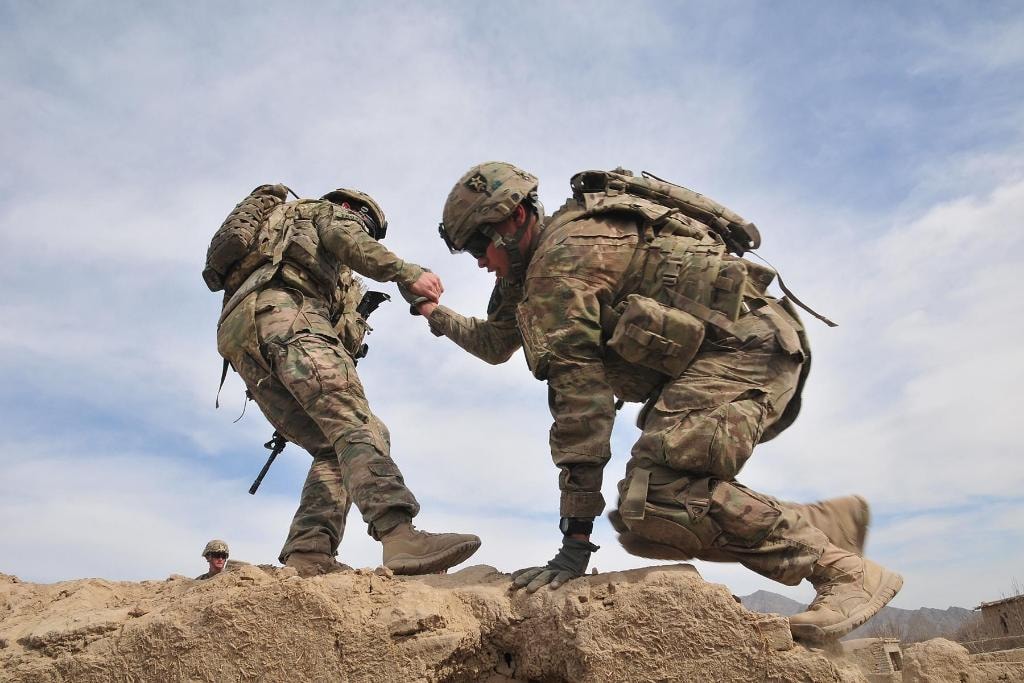
For the final item of attention in your RECON for recovery, I urge you to nurture others, particularly your family members and loved ones. I know how you are hurting and I have felt many of the emotions and sense of rage that comes from the stresses of combat. I can also tell you that you are not the only one affected, especially if you have family and friends that care for you. Involve them in your daily life, even in some small way. Do not isolate yourself from them completely. I recognize that from time to time you will need a quiet place to collect your thoughts. However, if you make the effort to involve them and teach them what you have learned, they will be more understanding to your needs for occasional solitude. Why not make an appointment to involve them? If it's the only commitment you make in your life, it will pay huge dividends in your recovery.
Nurturing also extends to your other warriors finding their way home. If possible, find a group of service members that are struggling and pass along these 5 things to them. Help them to begin their own RECON against this unseen enemy.
Take Away
Like a reconnaissance conducted on the battlefield, it is important to avoid contact with the enemy. Using these steps will allow you to focus inward on the things you can control, instead of becoming overwhelmed with all that is going on around you. In effect, this self-awareness helps you reduce contact with the triggers of stress related disorders. It also allows you the opportunity to learn more about what's really important to you as you implement your healing operations.
If you will step back and think about what I am providing you here, it will become clear that these steps will work for you. I can also say that they have for worked for others I coach. RECON represents small daily steps that you can control and they will assist you in your recovery process. For those of you that are wondering, "which of these steps is the most important", I would be happy to answer that, because I know it is the last step of nurturing others.
How do I know this? I know this because writing this blog and sharing these tips is my way of nurturing other warriors in their quest to find their way home.
I also know that the other 4 steps have worked for me, as well. Besides, any warrior knows "if you're gonna talk the talk, you better walk the walk."
All the best,
Warrior, out!
Explore Topics
Written by
Beau Chatham
Content creator and writer sharing insights and stories.